
About
This site is a little project that lets me make fun of some things and sense of others. I use it to think a little more relationally without resorting to doing actual math.Subscribe
Archives
- February 2012
- January 2012
- December 2011
- November 2011
- October 2011
- September 2011
- August 2011
- July 2011
- June 2011
- May 2011
- April 2011
- March 2011
- February 2011
- January 2011
- December 2010
- November 2010
- October 2010
- September 2010
- August 2010
- July 2010
- June 2010
- May 2010
- April 2010
- March 2010
- February 2010
- January 2010
- December 2009
- November 2009
- October 2009
- September 2009
- August 2009
- July 2009
- June 2009
- May 2009
- April 2009
- March 2009
- February 2009
- January 2009
- December 2008
- November 2008
- October 2008
- September 2008
- August 2008
- July 2008
- June 2008
- May 2008
- April 2008
- March 2008
- February 2008
- January 2008
- December 2007
- November 2007
- October 2007
- September 2007
- August 2007
- July 2007
- June 2007
- May 2007
- April 2007
- March 2007
- February 2007
- January 2007
- December 2006
- November 2006
- October 2006
- September 2006
- August 2006
Categories
- 5×7
- arrogance
- booze
- brands
- communication
- consumption
- creeps
- crime
- easter bunny
- ego
- ethics
- excuses
- expectations
- experience
- faith
- family
- fashion
- finances
- friends
- gum
- halloween
- hipsters
- inequality
- kids
- language
- love
- men
- moderation
- monsters
- music
- optimism
- orthodontics
- pain
- parties
- patience
- perception
- philosophy
- politics
- pop culture
- queens
- santa
- school
- sickness
- snobs
- snuggling
- sports
- standards
- stress
- success
- technology
- television
- tooth fairy
- travel
- Uncategorized
- value
- virginity
- weight
- women
- work
- xenophobia
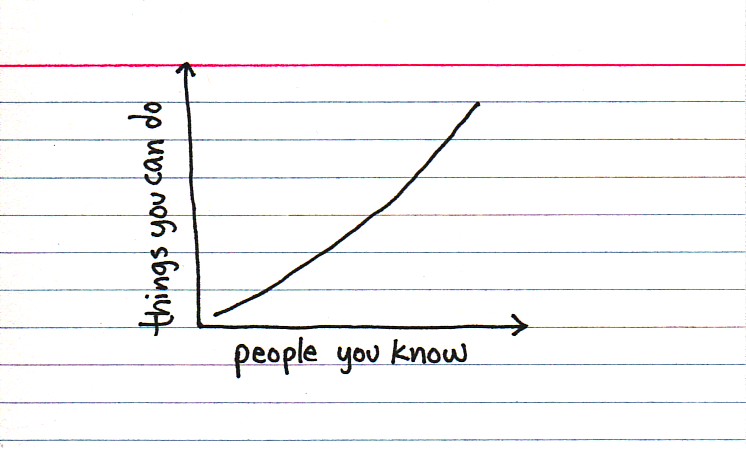
This is what 2.0 means.
This entry was posted in Uncategorized. Bookmark the permalink.


Brilliant! Quite possibly the best explanation I’ve ever seen!
That is pretty awesome. Thanks for sharing.
Pure genius. I reach Web 2.0 and Social Web applications to librarians around the world. Barring your not wanting me to I’m definitely going to use this in my presentations. Proper credit will be given of course.
Yes. That’s it! You have such a great knack for hitting these things so perfectly.
now that simply explains what clout means….
very simple yet quite effective.
You have a knack for simplifying things that are difficult to express. Love indexed.. :)
Do you also believe in the a tooth fairy?
Sorry, but I think the tooth fairy didn’t make it into 2.0. Look for an update in the next few months.
I’m clearly not smart enough for this site but I keep reading!
Good for you, Cheryl. One will click for you and these will become easier for you.
Additionally, I am intrigued by your perspective. This is the only “blog to check out” listed on my blog asojournofperusal.blogspot.com. And I email your blog address to all my intelligent, logic oriented, humor enthusiast, and mathematical friends. Read your new posts every day. Thanks!!
For the record, the more people you know doesn’t mean shit. Volume does NOT equal value. If anything, quite the opposite. The more you got means the more you’ve got to maintain and the less resources there are for any node on the system. The reason why social media is so poor is because so many have bought into the notion that high school vanity means opportunity. It doesn’t.
And so this is why I get Facebook App invites… :P
Jessica, what you’ve drawn, perhaps unknowingly, is a simplified version of what economists call “network effects” or “network externalities,” the concept of which was first brought up about 100 years ago. The curve has actually been shown to be exponential (more upward curving than what you have).
Love this. I’m actually blogging a response with a revised graphic based on your ingenious observation.
Thank you. This is true in every aspect.
Jessica, I agree with the overall principle, however, I would hesitate to suggest that there is a direct correlation between the number of contacts one has and the value of their network. Value is about more than quantity, it’s about aggregate quality.
Link to my response below, looking forward to your feedback – http://jburg.typepad.com/future/2008/08/do-correlations-define-web-20.html
oh i so love this blog….. :-)
I think this graph was true way before 2.0 or 1.0 or even the decimal system. We used to call it the Old Boy Network.
If 2.0 = Facebook, MySpace and their ilk, I totally disagree. These all seem very poor tools for getting anything done.
Yeah, it’s not what you know, it’s who you know.
And here is the dark side of social networking they usually hide from you: http://is.gd/1uOE
Jessica,
I’d like to use this Index card for a future post of mine regarding how Non-Profits use social networking tools. I’ll ping you back.
John
http://www.corporatedollar.org
P.S. I love your Indexed Book.
Beautiful.
Jye
http://www.jyesmith.com
Maybe the Y axis should be labelled “Things you THINK you can do”. ;)
OMG that is awesome.
Ironically I discovered this via Twitter!!
:)
Awesome. I discovered this via the delicious front page. Congratulations! (;
Luceat Lux Vestra Jessica
Is content King? You betcha.
You clever bricolager, you.
I think this should almost be on log paper :) The ‘things you can do’ axis should increase wayyy faster than linear with ‘people you know’ :)
Does the vertical axis stop at the Dunbar Number?
Where’s the z axis: time you can spend on each new incompatible system demanding your attention, to wade through hundreds of inconsequential posts. We all know there’s more volume out there (whether it’s books or networking contacts or wiki comments); we also have known for years that librarians’ job is no longer increasing access, it’s filtering and navigating. Preferably not by adding an additional service to have to visit in the multiple stops we expect users to go through to get one item of information. I’m not pooh-poohing, just stating the challenge. :-{)} Okay, you got my 30 seconds. Bye.
Following Brad’s comment – a “things you do do” axis would be interesting.
You’ve captured it PERFECTLY. Thank you!
Katie
I agree with this, but would add a second a picture. The horizontal axis would “people you follow” and vertical axis would be “your free time”. The result would be line looking a bit like the stock markets now – straight down!
so sayeth the extrovert
Pingback: Remixing what web 2.0 implies
Pingback: Clarity and your Social Media Team. | GAby Menta
Pingback: Social Media *IS* Public Relations « usemymind.com.au
Pingback: Social Media *IS* Public Relations « ummpr.com.au
Great, love it!
Excellent. I’m dealing with a bunch of luddites and this will do the trick nicely.
Well worth pinching. With acknowledgment of course.
I saw a management book on the shelf of the Value Village that was full of these sorts of graphs, and I remembered your blog…It’s been many moons since I’ve read your insights.
Nice diagram but some wishful thinking in it or perhaps not enough dimensions. It is possible to know a lot of people and still not be able to achieve as much as you hope. Another problem that this doesn’t address is sustaining what is done. It is possible to know a lot of people and initiate a progressive change. And then months/years later, key people in the network move on and the initiative is cancelled or slowly dies from lack of interest (or lack of funding/management support). Some of that may have to do with a change initiative started before the workforce and management was truly ready (perhaps too early in the innovation/adoption cycle). Some of it may have more to do with the deeply entrenched hierarchical culture/bureaucracy of government agencies that reward current behavior and therefore see little reason or incentive for making changes.
Interesting…one little tweak – change “people” to “smart people”
Pingback: The power of connections – why adding friends makes sense | Second Opinion
Pingback: Harold Jarche » Frictionless learning